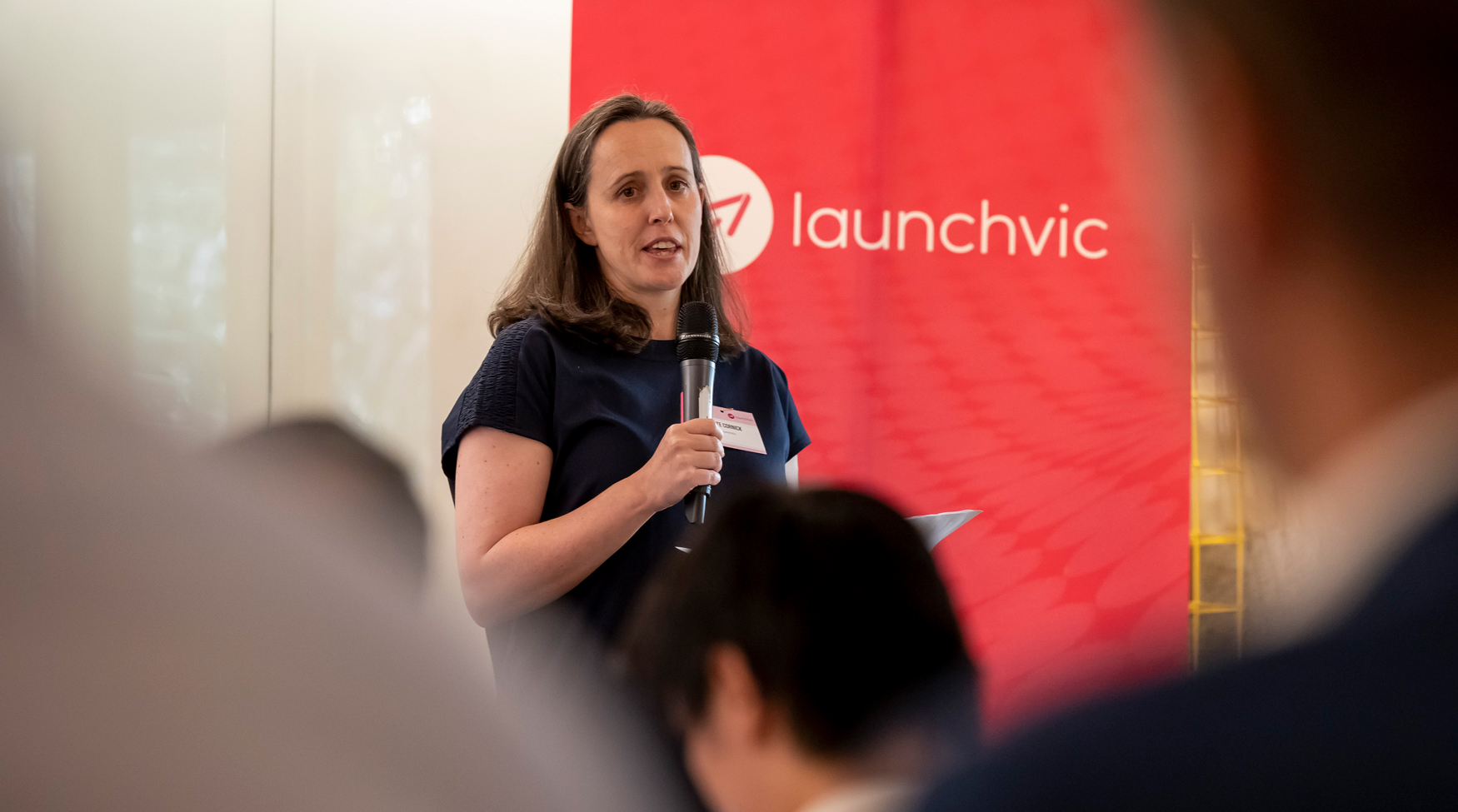
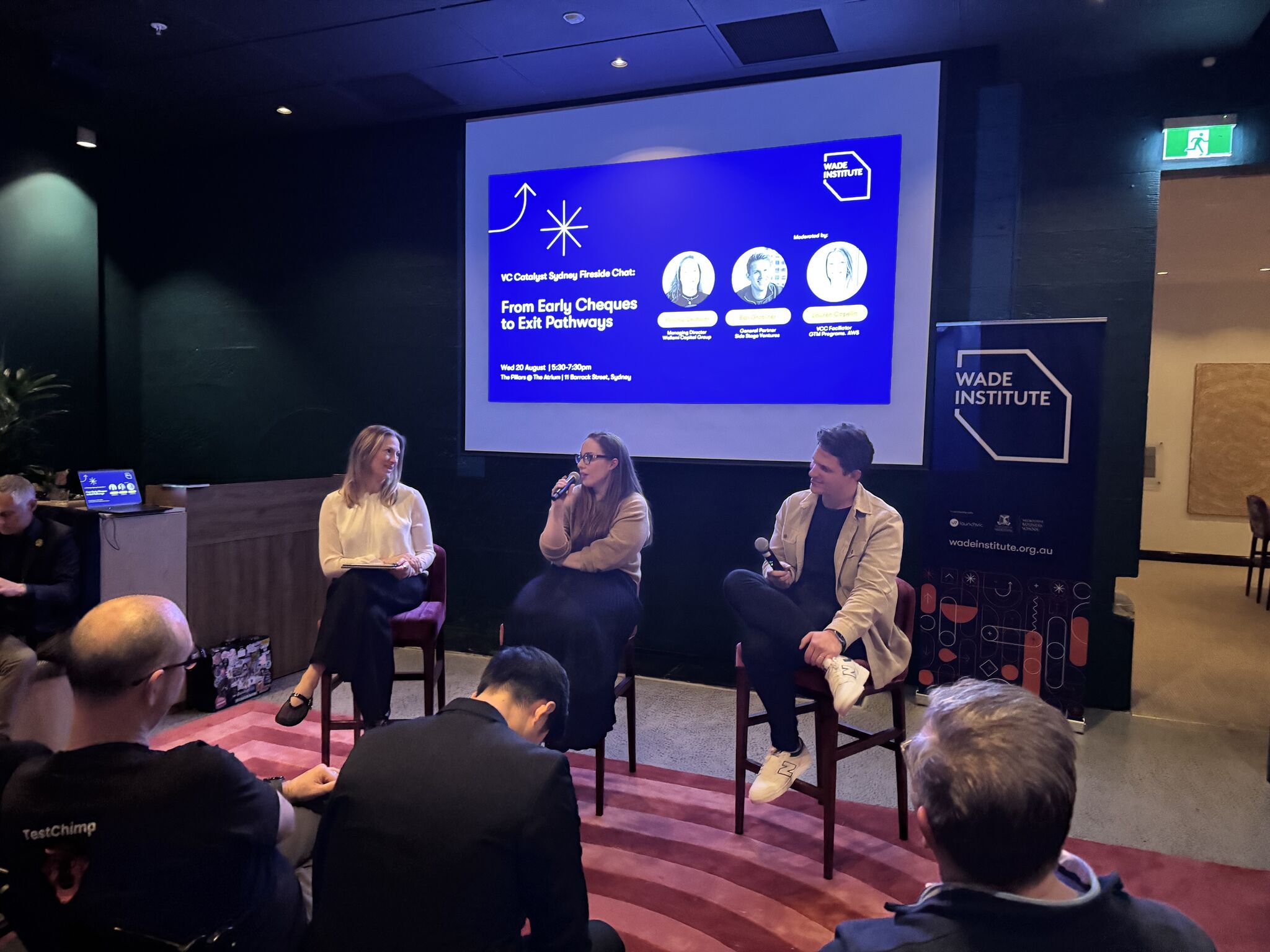
Ten years ago, if a founder mentioned an ‘exit strategy’ in their pitch, it was a dealbreaker. Today, investors are thinking differently. At our recent Sydney panel event From Early Cheques to Exit Pathways, panellists Ben Grabiner (Side Stage Ventures) and Victoria Denholm (Wollemi Capital Group) joined facilitator Lauren Capelin (AWS and VC Catalyst facilitator) to explore how Australian startups can grow ambitiously while still planning for realistic liquidity events.
For a room of VCs, angels, and investors, it was a rare chance to hear directly how experienced fund managers weigh the tension between sky-high ambition and the practical realities of exits in 2025.
The red flag that isn’t anymore
Lauren set the tone by recalling how attitudes have shifted: “If a founder came to you and said, ‘I’m starting this and here’s my exit strategy,’ it was the ultimate red flag. We didn’t want to hear about people thinking about selling a business – we wanted people to think about, you know, to the moon basically.”
Victoria agreed that the conversation has matured: “I don’t necessarily think it’s front and centre in all of the early-stage conversations that we have, but it’s definitely something that we think about. It would be a red flag if the founder’s coming and raising capital to then immediately exit. But I also think that not thinking about that is also a red flag, so somewhere in the middle.”
IPOs aren’t the only path
For Victoria’s family office, exits are part of a much longer arc of capital deployment. “Everyone in this room is smart enough to know the IPO landscape at the moment is not really an exit pathway,” she said. Instead, she pointed to M&A as a more common route, and the “nascency of the secondaries market in Australia” as an area poised for growth. “I think we will see an influx of those in the next year or so.”
Ben, whose young fund has already had two exits, was more cautious. “Any big business takes time to build… these things take 5, 6, 7, 10 plus 15, 20 years,” he said.
For him, the challenge is backing founders who will resist early offers: “To build a billion dollar business, you’ve gotta say no at 50 and no at 100 and no at 500. Sometimes that gets a bit irrational, but that is the only way you build multi-billion dollar businesses.”
Betting on the people
When the discussion turned to investment signals, both panellists circled back to the same theme: people.
Ben admitted his worst mistakes came from ignoring instincts about founders. “Every time I made a bad mistake, it’s been going against my instincts on the people,” he said. Side Stage Ventures now bans the phrase “great founder” and instead looks for specific traits: repeatability, bias to action, spikiness in a particular area.
“Really exceptional people have done stuff that you don’t even think is possible.”
Victoria echoed the sentiment: “Especially at the early-stage, you are investing in the person, yes the idea, and why you think that person is uniquely placed to solve that problem.”
Australia’s quiet edge
Despite its smaller capital pool, Australia continues to punch above its weight.
“Australia’s produced more unicorns per dollar invested than anyone else in the world,” Ben said. “It’s actually wild, and it’s just something we take for granted here.”
Victoria added that Australian companies often downplay their origins. “We are just so crap at telling the Australian story… the first thing [founders are] told when they go overseas is to drop the Australian tag. To me, that’s really disappointing, and I think that’s where we’re gonna lose, that we don’t have that sense of national pride.”
Both saw this as a missed opportunity at a time when global capital is looking for safe, high-quality markets. “There’s a real opportunity to attract especially UK, European, and other countries’ investment in Australia,” Victoria said. “M&A is a real big piece of that as they diversify away from the US.”
What’s next?
Looking ahead, both panellists pointed to ecosystem maturity as the next hurdle. Ben hoped to see “a lot more really high quality early-stage funds and a diversity of funds,” while Victoria emphasised the need for a stronger secondaries market.
“That’s a really important part of the market that I hope matures pretty quickly in the next five years.”
The message for the audience was clear: Australia has proven it can produce world-class startups with global reach. But sustaining that success depends on founders, investors, and policymakers embracing exits not as a taboo, but as a natural part of the growth journey.