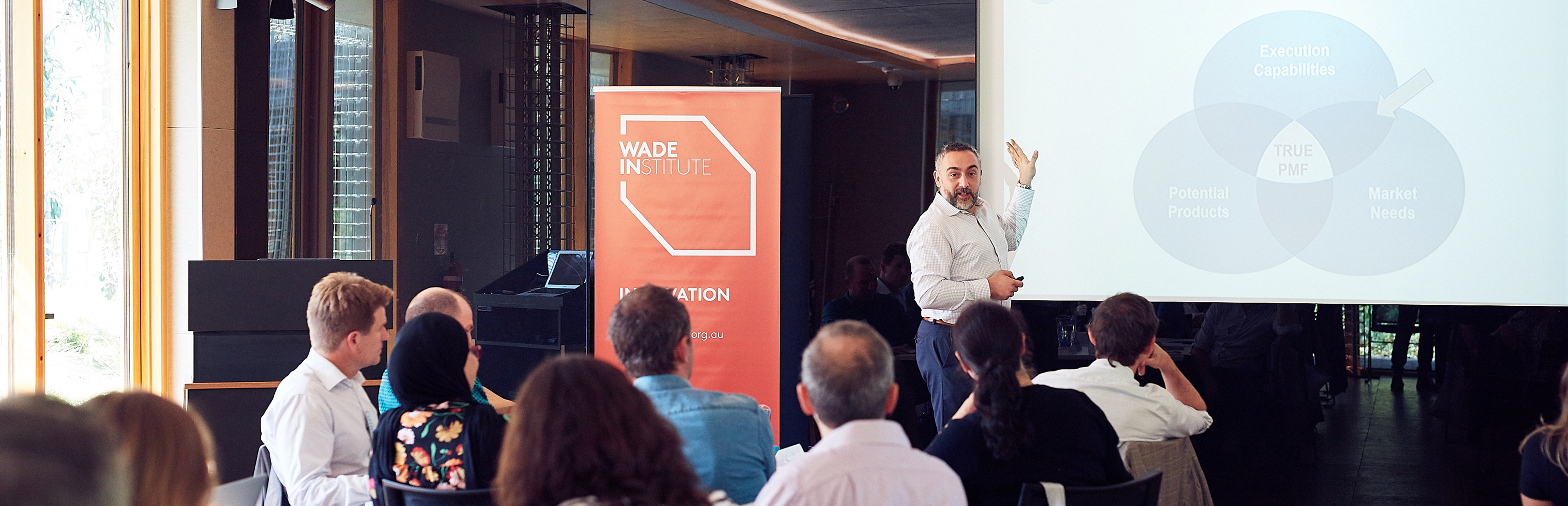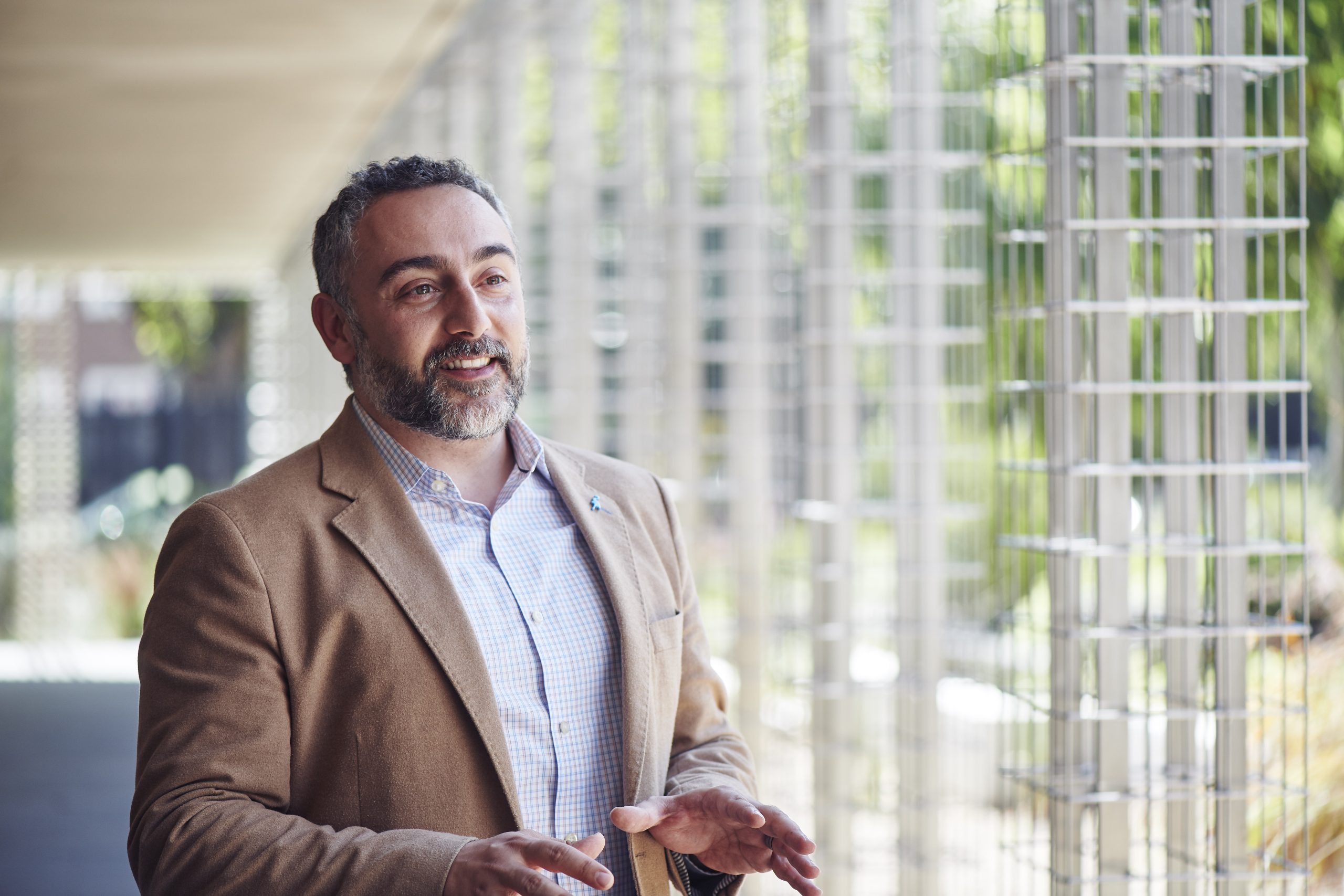
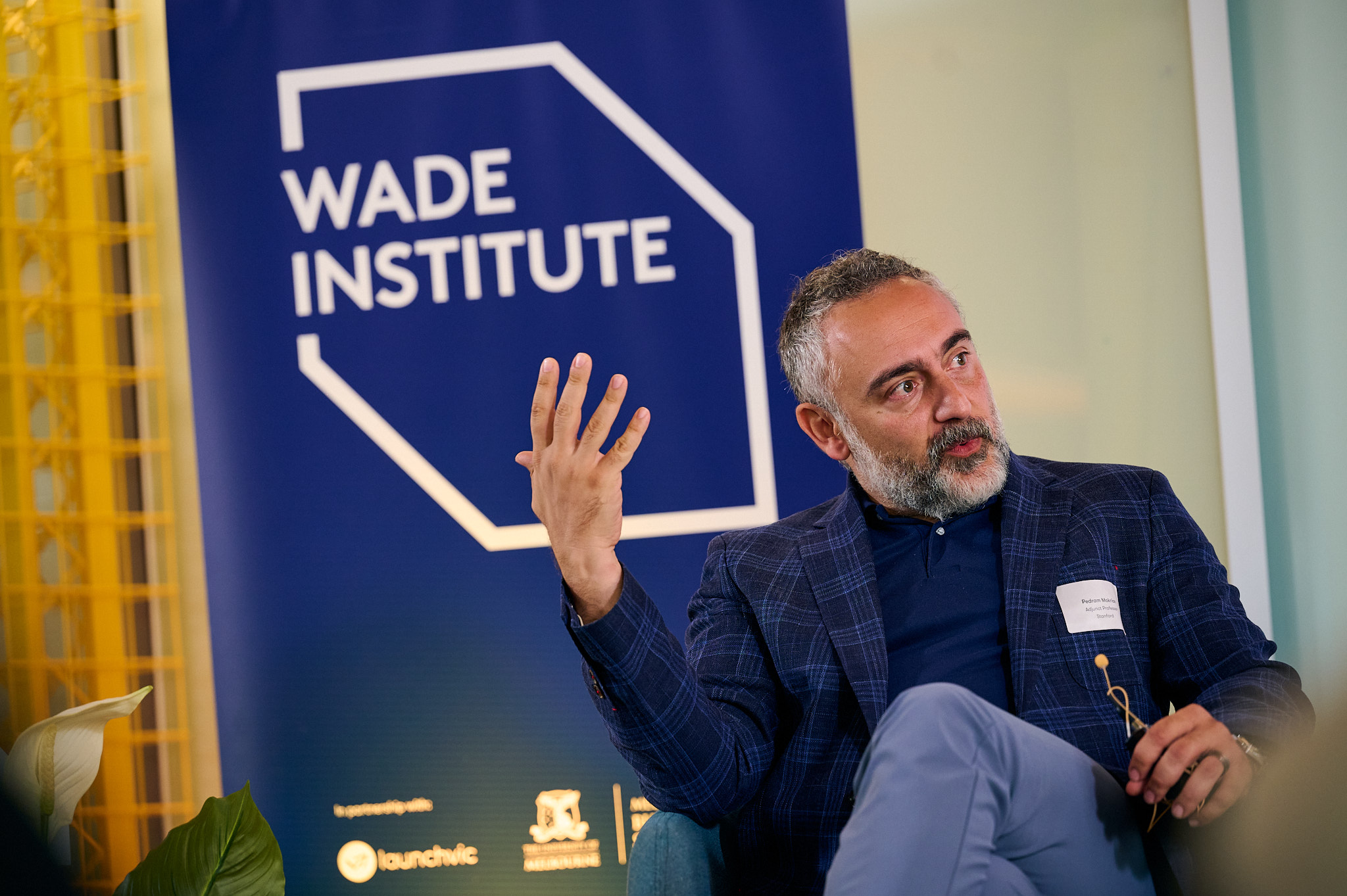
In an ever-accelerating world, companies can’t afford to take a chaotic approach to innovation. Stanford and VC Catalyst’s Pedram Mokrian argues that organisations need to quit the guesswork and embed innovation as a structured discipline.
Pedram Mokrian says that corporate innovation today is where marketing was in the 1970s:
“It’s like the Mad Men era: a bunch of people sitting around having conversations and then the light bulb goes off,” he says. “You’ve got the campaign, and boom, it works – because you’ve got the right marketing agency working with you.”
The approach is haphazard and the success sporadic. Like marketing, Pedram argues, corporate innovation needs to evolve into a structured discipline – one that can be taught, managed and measured like it is in educational programs such as VC Catalyst. According to Pedram, too many companies have a “cargo cult” mentality, where they mimic superficial elements of innovation without understanding the underlying principles – hoping for magic.
Innovation takes discipline
“When something is not treated as a discipline, rigorously, you don’t establish objectives and true means by which to get there – clear budgets and clear outcomes,” says Pedram, a Stanford lecturer and seasoned venture capitalist who spoke at Assembly 2024: A VC Catalyst Conference.
“The processes are largely missing because people are trying to make those up on the fly. The budgets are ambiguous and amorphous. The leadership doesn’t really know how to think about this stuff. They know change is coming, but they don’t really know how to cope with it. And then arguably one of the hardest things is that people are not comfortable with change.”
A survival imperative
With the pace of change accelerating and the risk of obsolescence only heightened, innovation is a necessity, but the strategies most companies are using aren’t effective enough. “Historically speaking, there’s been a wave of innovation investments for decades, which has been slowly increasing, but it was always about some distant future that was too far for us to actually care about, so the results didn’t matter,” explains Pedram.
“What’s happening now, though, is that as the world is changing, as the efficiencies can become even more interesting, you’re getting to a situation where it actually now does matter, because you can become obsolete in months, not decades. So this idea of innovation has gone from something that was an interesting byproduct, to something that’s now becoming more and more centrally needed. It’s no longer a nice-to-have.”
Still, in “just about every organisation” he visits, Pedram can tell their multi-million-dollar innovation projects have no hope of success: “If I hadn’t spent so many years in Silicon Valley and in the venture ecosystem,” he says, “I wouldn’t be able to discern the differences in team and taste and decision-making quality that you see in a functioning start-up versus one that has no chance of going anywhere.”
Too many companies “confuse activity with outcomes” because “people don’t know what they don’t know”. Says Pedram, “They’re spending the money, hiring the people, doing the things they think they should be doing, but the outcomes aren’t going to be there because they’re missing critical components.”
Why tech does it better
Pedram highlights the divide between innovative (usually tech) companies and those struggling to keep up, noting that tech tends to get it right because there is an inherent desire for growth at the leadership level, and a certain “nervousness” in the industry. Fearful of becoming complacent, they embrace a venturing mindset.
“Venture is proactive risk-seeking almost,” says Pedram. “It’s not risk management. You’re actually risk-taking, but you’re doing it in a very controlled way to drive growth.”
Pedram describes venture capital as the chief driver of innovation for the past 60 years, and stresses the “paradigm of venture”: “It’s portfolio theory. It’s taking a long view. It’s prioritising execution around teams and people. It’s being customer-centric. All of these are the principles of how venture works, and they need to be, in an organised way, embedded within organisations.”
Changing the conversation
In 2023, Pedram co-founded software company Innovera, where he serves as CEO, leveraging AI and language models to “manage, organise and then inject that venture mindset into organisations”. In his research at Stanford, he is also identifying ways to measure companies’ innovation capabilities. Kicking off in April, Stanford’s invitation-only, one-year Luminarian Fellowship will bring together top international executives tasked with shaping innovation in their organisations. “It’s that sort of fraternity,” says Pedram, “that is going to start to change the conversation.”
Pedram notes that Australia, with its resource-rich environment and established infrastructure, is well-placed to capitalise on innovation opportunities.
“You’ve got a great base of knowledge and population here that can do things,” he explains. “You’ve got great systems in place that can support things [to] actually happen. You’ve got a great ecosystem. You have great allies. Despite the fact that you’re very far from everything, you’re still heavily connected. So you’ve got all the raw ingredients for success.”