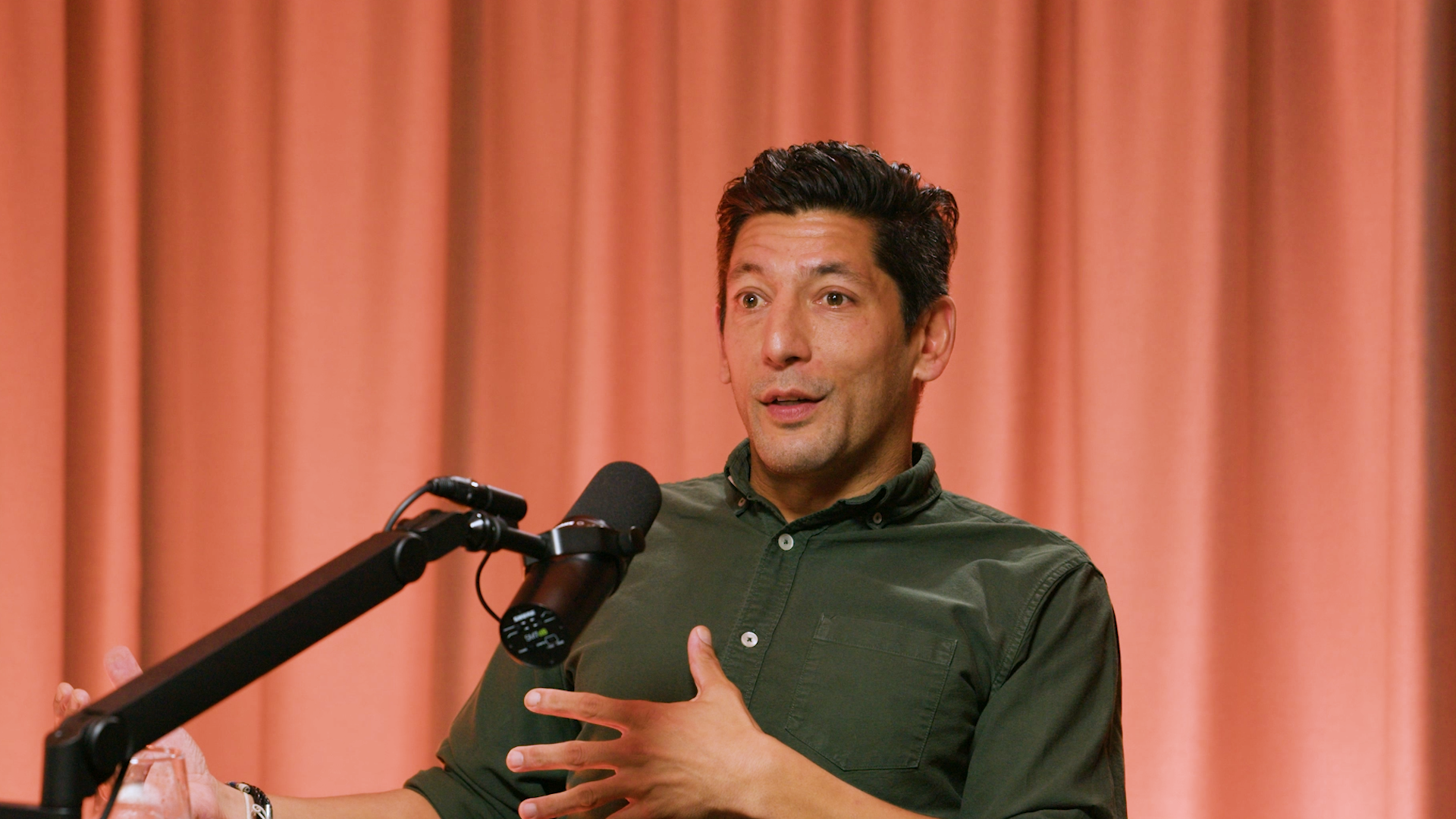
Why the “two types of impact investing” story is holding investors back, and what the whole field actually looks like. Latest opinion piece from impact investor Dan Madhavan.
If I asked you to describe the Olympics to an alien how would you begin? Most people would say it’s a collection of sports. What’s a sport? The only way to describe a sport is to describe the activity. Yet, if you started to explain the Olympics by describing the act of shot putting (or is it putting a shot? Put shotting? Shotting a put? This is hard already) then you would be doing an incredibly poor job of helping our interplanetary visitor understand what the Olympics is.
The Olympics is not one thing. It’s lots of things. Many of those things appear to have exactly zero connection with other Olympic things. Putting the shot (thanks Claude) seems to have very little to do with two people rowing a boat, which appears very different to fighting someone in a white suit with a thin sword. But, we (us human beings) seem to need a single concept that binds all of these strange and disparate activities under one idea. The Olympics.
Investing is like the Olympics. It’s not one thing. It’s many many things. Many of these things look very unlike other investing things. That said, they are all about trying to make a financial return and they all involve consideration of risk.
My favourite corner of the Olympics is Track and Field. And that’s how I like to think about impact investing.
The oversimplification we all reach for
The impact investing folks have flattened a complicated space into shorthand, I find this shorthand a gross oversimplification. However, I’m as guilty as anyone of using it. We say there are two types of impact investing. There’s concessional, where you’re willing to consider taking less of a financial return than the risk would suggest you should. And there’s commercial impact investing, where you’re trying to get the same sort of financial return the risk dictates you should be seeking, relative to other investments you could make.
Commercial is often called Finance-First. Concessional is often called Impact-First, because you’re prioritising the impact over the financial. That distinction is fine as far as it goes. The trouble is that most investors stop there.
The track: commercial, and mostly one shape
Picture the track events. Different distances, but fundamentally the same activity.
The track side is what I think of as the commercial. You’re in your lane, you know what you’re doing (well, in theory you do), and you’re trying to optimise for risk-adjusted financial returns. You want to support impact in the process. They’re like track events. You’re always running, but different distances provide variation. Just like the variations of impact investing across VC, PE, infrastructure, private credit, and the list goes on.
For an investor, the commercial lane is legible. The structures are familiar, the risk and return maths behave the way it does everywhere else, and impact rides alongside a return you would recognise from any other “non-impact” investment in your portfolio
The field: concessional, and every event is different
Now picture the field.
The concessional side is a totally different story. Here you get all manner of weird and wonderful structures. Just like in field events, throwing a spear doesn’t look much like cantering up to a bar and trying to jump over it before landing on a mattress. Running really fast with a pole and trying to vault over an even higher bar is quite unalike spinning around and hurling a metal disc. You get a lot more variation in what people are trying to do, how they’re trying to invest, and the sorts of structures they can invest in.
Shot put, javelin, pole vault. Each is its own event with its own rules. Concessional impact investing works the same way. The structures do not resemble each other, and an investor who only knows the track will not recognise what they’re looking at.
There’s one more thing worth saying, because it’s where a lot of investors go wrong. Concessional doesn’t simply mean accepting a smaller cheque back (isn’t it strange we’re still running with the word “cheque”?). The concessionality isn’t always about the dollar return. It can be the patience of the capital: I’m willing to give them longer. It may mean a willingness to accept less liquidity, less security, or fewer rights. There are all sorts of things you can be concessional on. That flexibility comes down to understanding what trade-offs you are willing to make based on the level of impact you believe might be achieved.
Once you see concessionality as a whole field of trade-offs rather than a discount on returns, the range of things you can actually do with your money gets much wider.
Blended finance: where the track and the field meet
I believe the most interesting developments are happening where these worlds combine. The pointier end, or the frontier, of impact investing is in a space called blended finance. All of a sudden you’re blending different types of capital together. Commercial capital blended with concessionary capital, and potentially with grants as well, into a single deal, a single structure, or a single fund. Blending allows you to do things you couldn’t do before.
The capital stack itself is more complex and richer. If you think about the old capital stack of having debt or equity, now you have debt, concessional debt, equity, concessional equity, and grants, all of which you can put into a single structure and blend.
An example shows what that unlocks. I’ve seen a fund recently that is looking to lend into the creative arts, where one investor is going to take a first-loss position in the fund. They’re also willing to use any income they receive from their units to “top-up” the income of other unit holders if the yield is less than 5% in any given year. So, the concessional investor here is saying they will lose all of their money before anyone else loses a dollar. That they will give up their income to support a 5% yield for other investors. Everybody else coming in has the benefit of those protections, and that de-risks it for them when they’re looking at making the investment. The concessional investor uses their capital to “crowd-in” money that might not otherwise be interested.
That’s a deal that couldn’t exist in a single lane. The underlying loans are unlikely to produce commercial returns at the fund level. The concessional layer completely changes the risk/return equation for the commercial layer. One concessional participant brings in commercial investors who would otherwise not invest. The whole field works together in one structure.
I won’t oversell it. Blended finance isn’t a well-trodden path yet, and you can’t pull a structure off the shelf. But it’s where I believe the real potential sits, because it can fund things that couldn’t be funded any other way.
Where I would start
The point isn’t to learn the jargon. Impact investing rewards investors who know the whole field, not just the track, because the deals that matter most often live in the field, or in the blend.
It also starts with a more personal question than most investors expect.
If you want my one piece of advice for getting started, begin with a personal theory of why you’re doing it in the first place. If the answer is that you want to make as much money as possible, there are probably easier ways to do that (maybe take up putting shots). If it’s because there’s something in the world you would like to see changed, then ask yourself how much you care. Your answer to that question may provide a guide to how flexible you might consider being in how you make your investments.
In the end this isn’t only a financial market. You’re operating in a market that, on the impact side, is often as much a market of ideas and aspirations as it is a financial market for returns. That’s why it pays to learn the whole field.
Impact investing explained: Finding the right capital for your mission with Dan Madhavan
Dan Madhavan has spent more than 25 years in wealth management and financial markets, and half of that in impact investing. He facilitates Impact Catalyst and VC Catalyst at Wade Institute.