Why the best innovation in your business is probably already sitting in the room.
By Jess Christiansen-Franks, Managing Director Wade Institute of Entrepreneurship
I’ve lived two quite distinct careers – I spent years in the corporate world, working for major brands and consultancies around the world. And then I grew and led two disruptive innovation businesses, the kind that set out to do things differently. So I’ve spent real time in both rooms. And what strikes me most, still, is the chasm between them.
Room 1 – Tech startups: There are neon lights and branded t-shirts and ping pong tables (Yes, it can be a bit cringe) and untempered enthusiasm, people cheering each other on. A vibe of: yes it’s going to be hard, and no, we don’t know exactly what it’ll look like, but we can do it anyway. Almost blind optimism. And underneath the theatre, there’s a genuinely contagious culture: relentless creative problem solving. Innovation in this room sounds like “Let’s find all the problems and stamp them out, let’s make everything we touch the best version it can be”.
Room 2 – The rest of the economy: There’s interest in technology, in change, in creativity. I don’t want to suggest there isn’t, because there absolutely is. But there’s also caution, and tempered, well-constructed decision making. On its day innovation means “an opportunity to try something new”, and on its worst day, the word innovation itself lands with a small sigh. It sounds like another offsite, another workshop, another initiative to survive before you get back to the actual job.
Two rooms. Same ambition, in many cases. Wildly different energy.
Why does ‘innovation’ land so differently across these two worlds? And does it even matter?
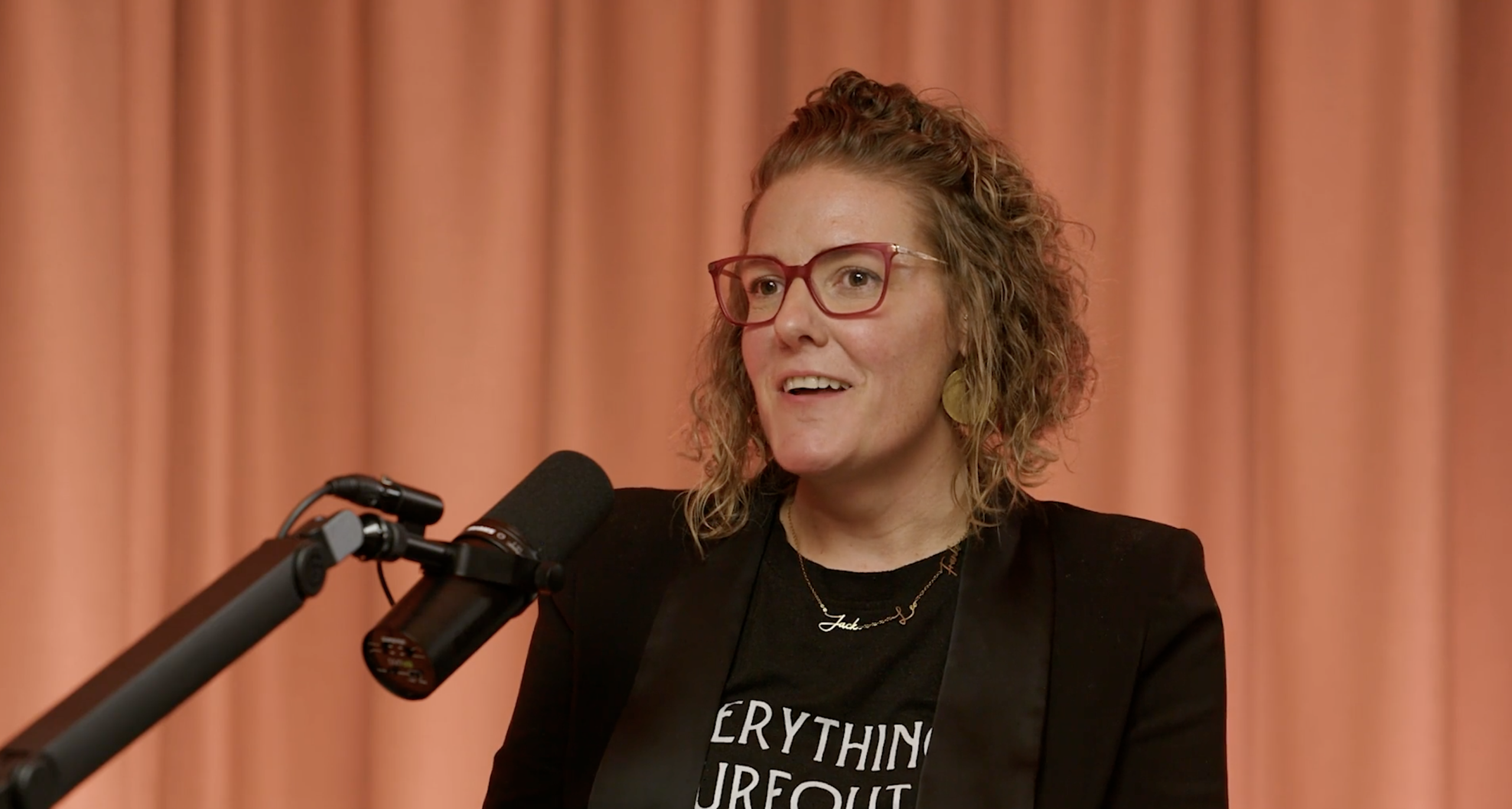
I think it matters enormously. As an ex-corporate recovering entrepreneur myself Ive always been amused and frustrated by this chasm. And I recently sat down with Brian Collins – entrepreneurship expert for 15+ years – to pull the whole thing apart. We talked through why the chasm exists in the first place, and what on earth we should do about it. Three things came out of that conversation that I haven’t been able to stop thinking about.
1. The wall between the two worlds is now artificial
Here’s the point of Brian’s that stopped me. For twenty-five years, the hard part of building anything was the building itself. The technical skill to actually get the thing up and running. If you had the idea but not the build, you were stuck.
That’s gone. No-code, low-code and AI have collapsed it. Two years ago you genuinely needed a different skill set to try something new. Now execution is open to almost anyone who’s willing to have a go.
Which means the thing holding you back isn’t capability anymore. It’s a way of thinking. The startup world’s real skill was never the coding. It was the creative problem solving, the willingness to look at how things are done and ask what if we did it completely differently. That is entirely learnable, and it’s the one thing worth taking from that other room. Don’t be put off by the neon. There’s something real in there for you.
2. Your company already has entrepreneurs, ready to go
There are people like me sitting in your organisation right now, itching to build something. They want to solve the problem they’re already close to, the one they think about in the shower. They don’t want to leave and go elsewhere to find a different one.
That was my own story. What never sat well with me was the feeling that I’d had to leave one world to find the other. When I first crossed over, I was so energised to find a whole community bringing creativity and ambition to every decision they made, from the start of the day to the end of it. It was never just problem solving in the corner. It was a completely different way of approaching the whole business. And once you’ve worked that way, you can’t really go back.
Let’s be honest – the startup world has done a good job of alienating everyone else, and I’ll own that on its behalf. But the answer was never to make your best people quit and become founders. It’s to give them the framework to think creatively about the problems right in front of them, without walking out the door.
3. Your team already has the idea for what’s next
Don’t be tricked into thinking that ‘innovation’ is something that happens ‘over there’ by ‘those people’. Just as you’ve got the people sitting ready, you’ve almost certainly got the ideas too.
In fact – given you’re this far into this article – I reckon you’re doing it right now as you read this. Half-thinking “What if we finally digitised that intake process the whole team dreads.… What if we trialled an online version of the thing we somehow still do on paper… What if that clunky quarterly report could more or less build itself?”
That itch, that instinct to reimagine the boring thing, is the entrepreneurial mindset already switched on. It’s not a personality you’re either born with or not. It’s creative problem solving, applied to your own work. You don’t need permission to think that way, and you certainly don’t need to leave to do it.
Clearly I’m passionate about this (verging on zealous), which is why, in collaboration with Brian Collins, my team at Wade Institute have built our new 3-day course ‘Think Like An Entrepreneur’. Not to turn you into a startup founder, but to give you this way of working, the creativity and the bias to action, without asking you to leave the room you’re already in.
To learn more about how we have approached the course watch our recent Ask Me Anything session, where Brian and I dive into the concepts of business innovation, and why its not just for founders.